CityDashBoard TalesofThings MapTube
Qrator Tutorials About Digital Urban
MRes ASAV SurveyMapper Contact Us
Showing posts with label Panoramas 20-30. Show all posts

2006-06-29

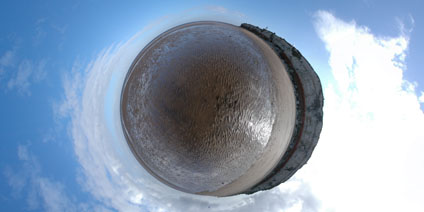
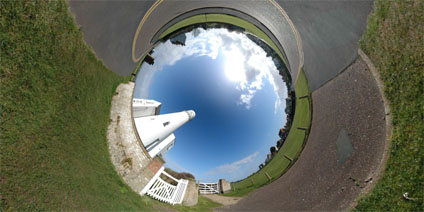
Not an Urban Panorama 2 - The Lighthouse


Continuing the 'why am i sat in the basement theme' of the previous post we present 'The Lighthouse'.

All we now need is an ice cream van and we are virtually there..

View the Quicktime panorama of the Lighthouse (2.9mb).

Not an Urban Panorama - The Beach


On a hot summers day when your stuck in the basement of a research lab ones mind can occasionally turn to outside the city. Thus the inclusion of a beach panorama to Digital Urban.

It may not be urban but it sure looks better than the basement at the moment...

View the Quicktime panorama of the Beach (2.9mb).

2006-06-27

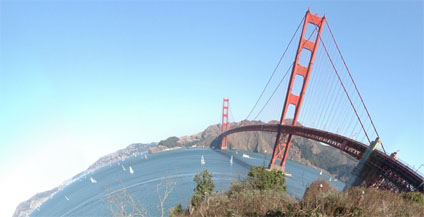
Golden Gate Bridge San Francisco Panorama


The Golden Gate Bridge suspension bridge spans the opening into San Francisco Bay from the Pacific Ocean. The entire bridge (including the approach) spans 1.7 miles (2.7 km) long; the distance between the towers ("main span") is 4,200 feet (1,280 m), and the clearance below the bridge is 220 ft (67 m) at mean high water.

The two towers rise 746 feet (227 m) above the water.

View the Quicktime panorama of the Golden Gate Bridge, San Francisco (3.4mb).

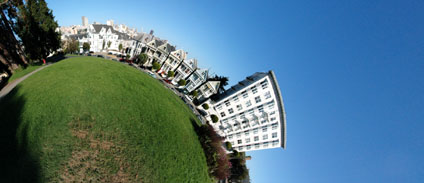
Alamo Square's "postcard row" San Francisco Panorama


The panorama was taken in the park overlooking Alamo Square in San Francisco, known as "postcard row". Postcard row consists of a series of Victorian houses with the stunning backdrop of the San Francisco skyscrapers.

View the Quicktime panorama of Postcard Row, San Francisco (3.3mb).

2006-06-06

High Dynamic Range Panoramas - UCL Roof

Panoramas cover a complete 360 x 180 field of view and thus the image creation process has to take into account a range of lighting conditions which are at best averaged out over the entire scene. This process often results in a loss of detail in shadows or overblown exposures when photographing the sky or windows in the case of capturing an internal scene.

The quality of the image is further restricted by the cameras limited dynamic range when compared to the human eye - resulting in panoramas which often do not represent how the eye would naturally view a scene. To counter this we can use High Dynamic Range (HDR) imaging to capture a scene over a known number of exposure settings and thus create a series of images that reflect the dynamic range closer to that of human vision.

In our first test we have captured a view from the roof of University College London on a clear sunny day. This would normally result in dark shadows in sections of the image due to having to average the exposure over the whole panorama. A standard capture technique would result in the image displayed below:
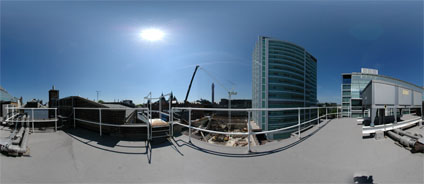


If we then capture a further two versions of the scene - both under and over exposed respectively - we can capture a wider dynamic range:
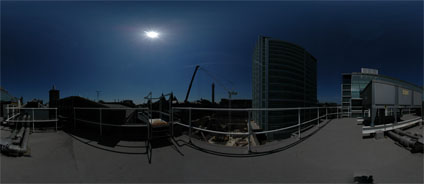
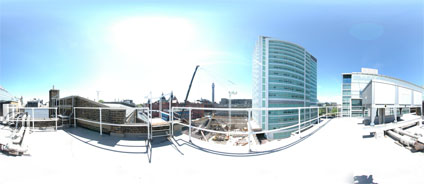


Using HDR software these images can then be Tone Mapped to create a final view which includes both the shadows and the highlights of the scene:
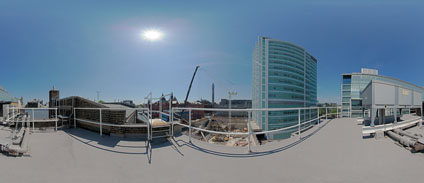


A total of 21 images were captured to create the panorama compared to the normal 6 for traditional techniqes.

View the final HDR panorama (2.2mb).
2006-05-03

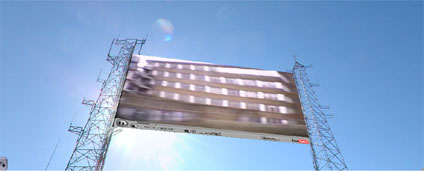
Twin Peaks Panorama Embedded Movie - Dream of Advertising?


Every now and again innovations come along that make us smile. This week has seen two come our attention (more on the second in later posts). The first one is the ability to embed YouTube movies into panoramas creating the ability to pump out adverts or just general content in panoramic space.

Using DevalVR which is the best new viewer on the block, it is possible to stream in movies. There are various examples out there using whiteboards or plasma tv's in panoramas but if your going to do an example its best to do it big and show a movie over Twin Peaks San Francisco.

Load up the example, pan round to the Twin Peaks Transmitters and click play... its our Ipod and Urban Perception movie looking out towards San Fran.

View the Panorama of Twin Peaks with the Embedded Movie

2006-04-25

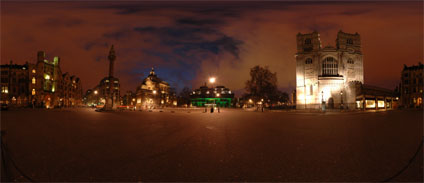
Westminster Abbey, London Night Time Panorama


Westminster Abbey is a work of outstanding architecture, constructed between the 13th and 16th centuries. The Abbey has been the location for numours Royal Weddings as well as every Coronation since 1066. The building as it is today features the west towers which were completed to the designs of Sir Christopher Wren and Nicholas Hawksmoor.

Recently filming of the Da Vinci Code was refused by the Church at Westminster, Lincon Catherdral takes its place in the forthcoming film.

View the panorama of Westminster Abbey, London (2.2mb).

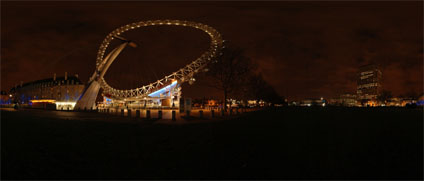
London Eye, London Night Time Panorama


The London Eye was designed by Architects David Marks, Julia Barfield, Malcolm Cook, Mark Sparrowhawk, Steven Chilton, and Nic Bailey. Standing at 135 metres high the wheel travels at 0.6mph and takes 30 minutes to complete a revolution.

The Eye has acted as a focus point for the regeneration of the South Bank area of London which is now home to a unique collection of restaurants, art galleries and shops.

View the Quicktime panorama of the London Eye at night (1.4Mb).

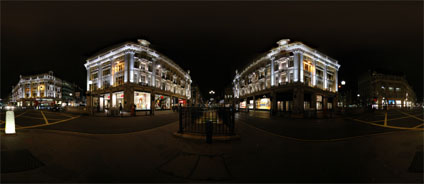
Oxford Circus, London Night Time Panorama


Oxford Circus's location at the junction of Regents Street and Oxford Street makes it a central location for shopping in London. It is within a short walk of the main shops on Oxford Street or the side lanes leading west to Bond Steet or east to Carnaby Street.

In short its a central point for London shopping.

View the Quicktime panorama of Oxford Circus at night (3Mb).

2005-10-20

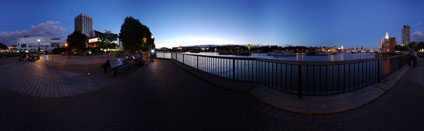
South Bank at Night London Panorama


The panorama was taken at dusk as people danced on the South Bank during a warm summers night. St Pauls and the London skyline can be made out in the distance.

View the Quicktime panorama of South Bank, London at night (1.9mb).